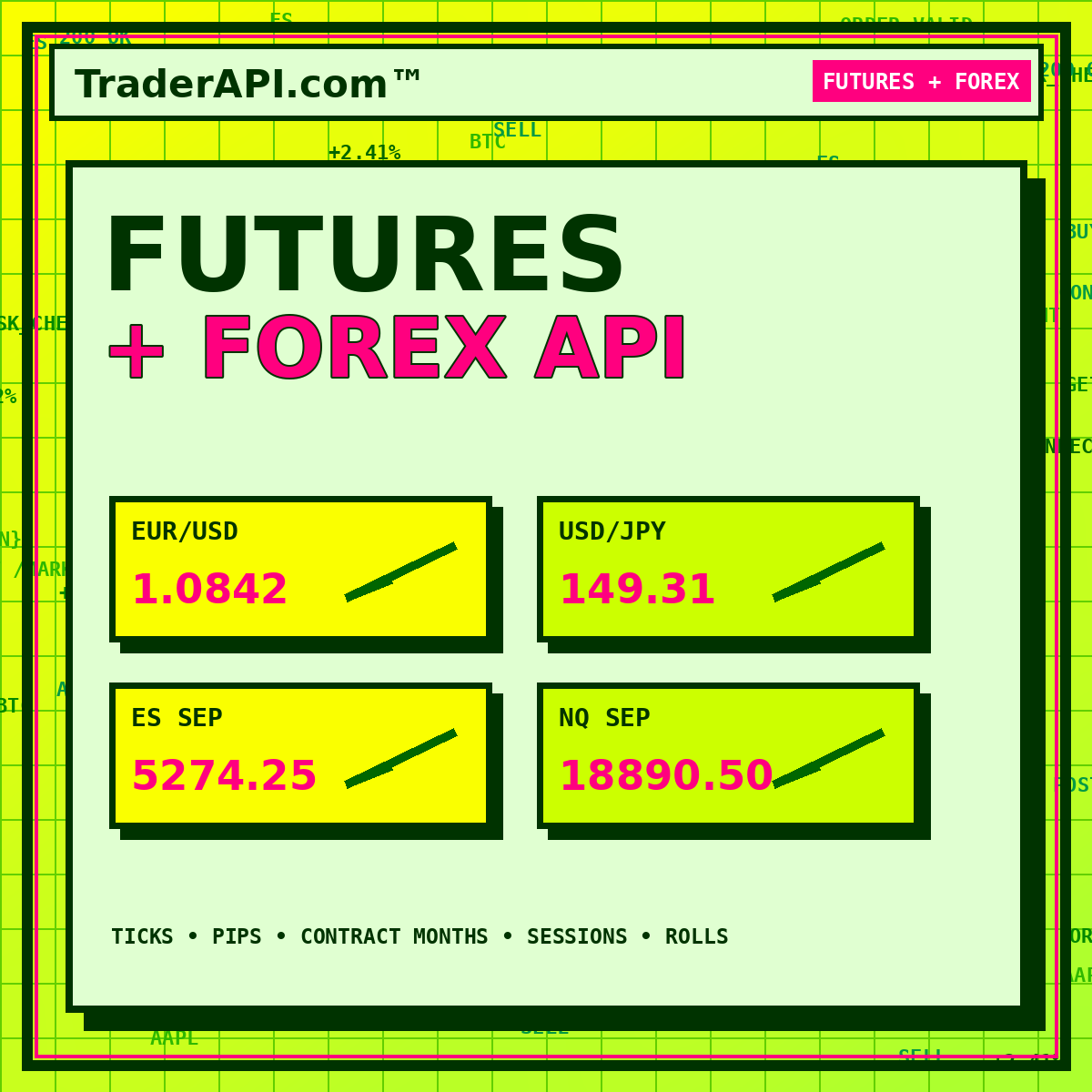
Futures and Forex Trader API Guide: Market Data Assumptions
Build futures and forex API integrations with explicit symbols, contract rolls, tick and pip values, sessions, timezones, bid/ask data, and position units.
Read 12-minute guide →Original 2026 field notes about trading-interface architecture, security, data models, recovery, and controlled automation.
Trader API field notes
The TraderAPI.com blog examines the parts of API integration that are easy to overlook: stream recovery, uncertain order state, exact numeric units, contract rules, credential boundaries, and the difference between a model proposal and an authorized action.
Articles are educational and provider-neutral. They do not recommend trades, promise performance, or present simulated results as live market data. Product capabilities and access conditions should be verified with current official sources.
Subscribe to the site-wide RSS feed or use the HTML sitemap to browse every page.
All articles
Build futures and forex API integrations with explicit symbols, contract rolls, tick and pip values, sessions, timezones, bid/ask data, and position units.
Read 12-minute guide →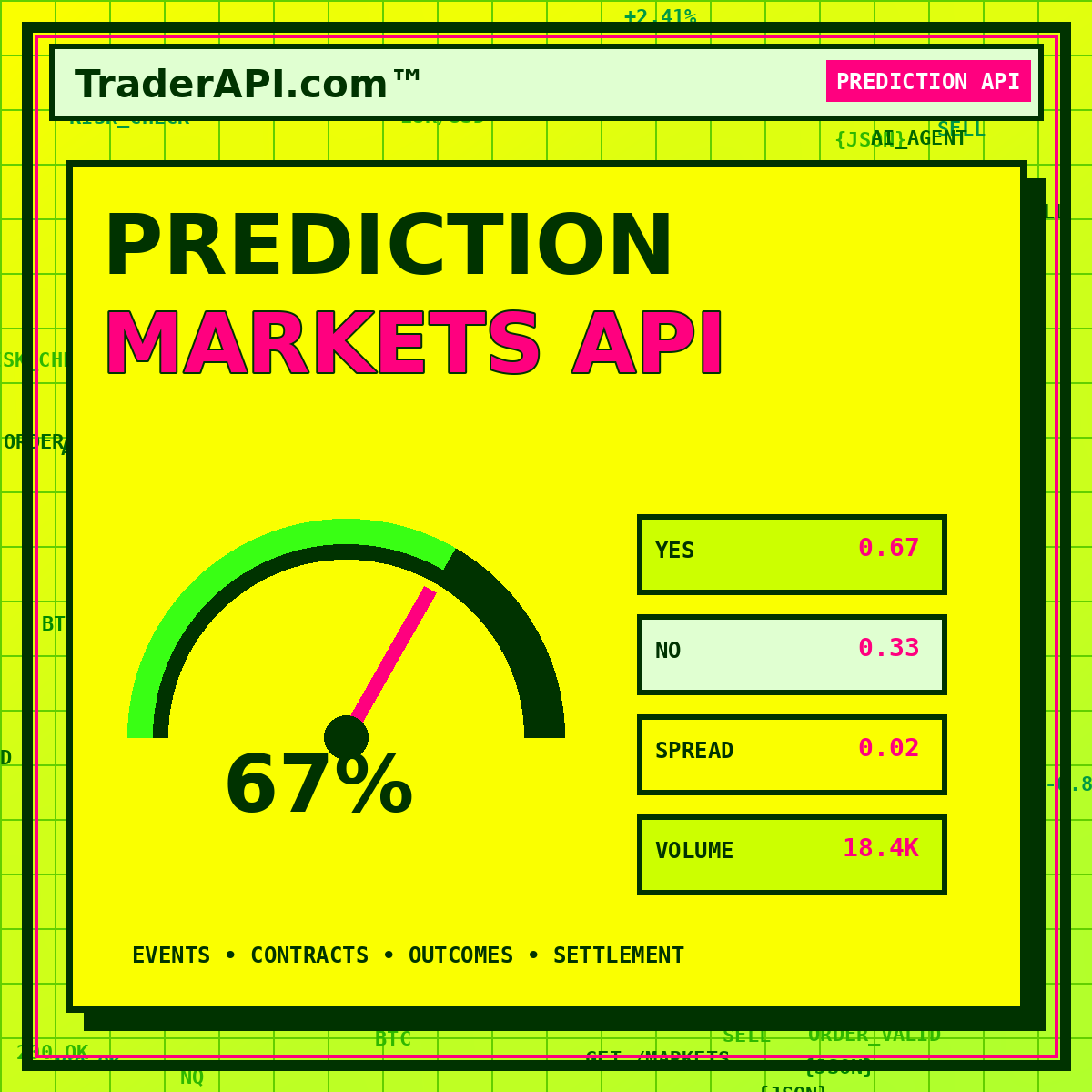
Understand prediction-market API concepts including events, markets, outcomes, prices, order books, settlement states, streaming, and historical data.
Read 12-minute guide →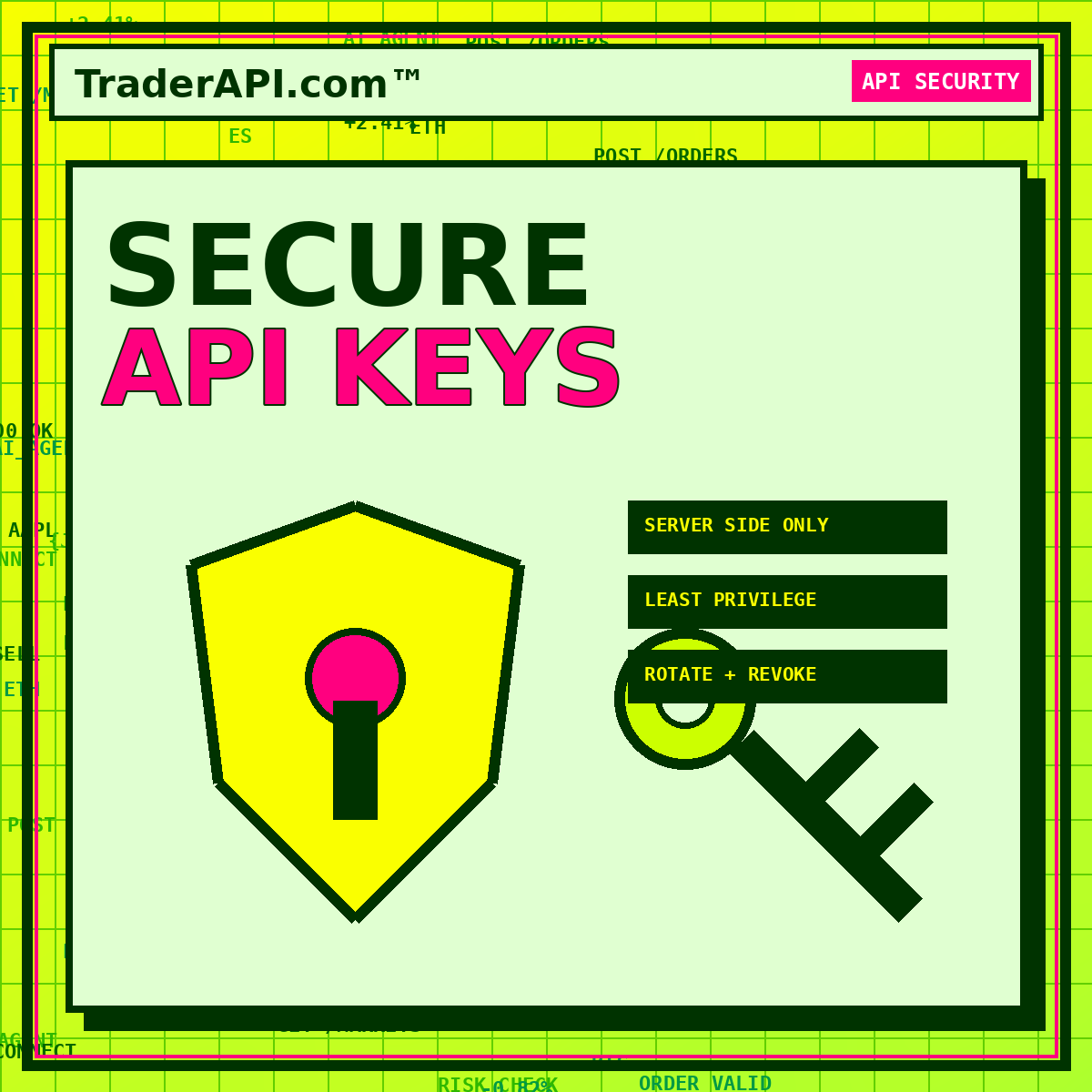
Protect brokerage API keys with server-side storage, least privilege, rotation, signing controls, audit logs, front-end isolation, and incident playbooks.
Read 11-minute guide →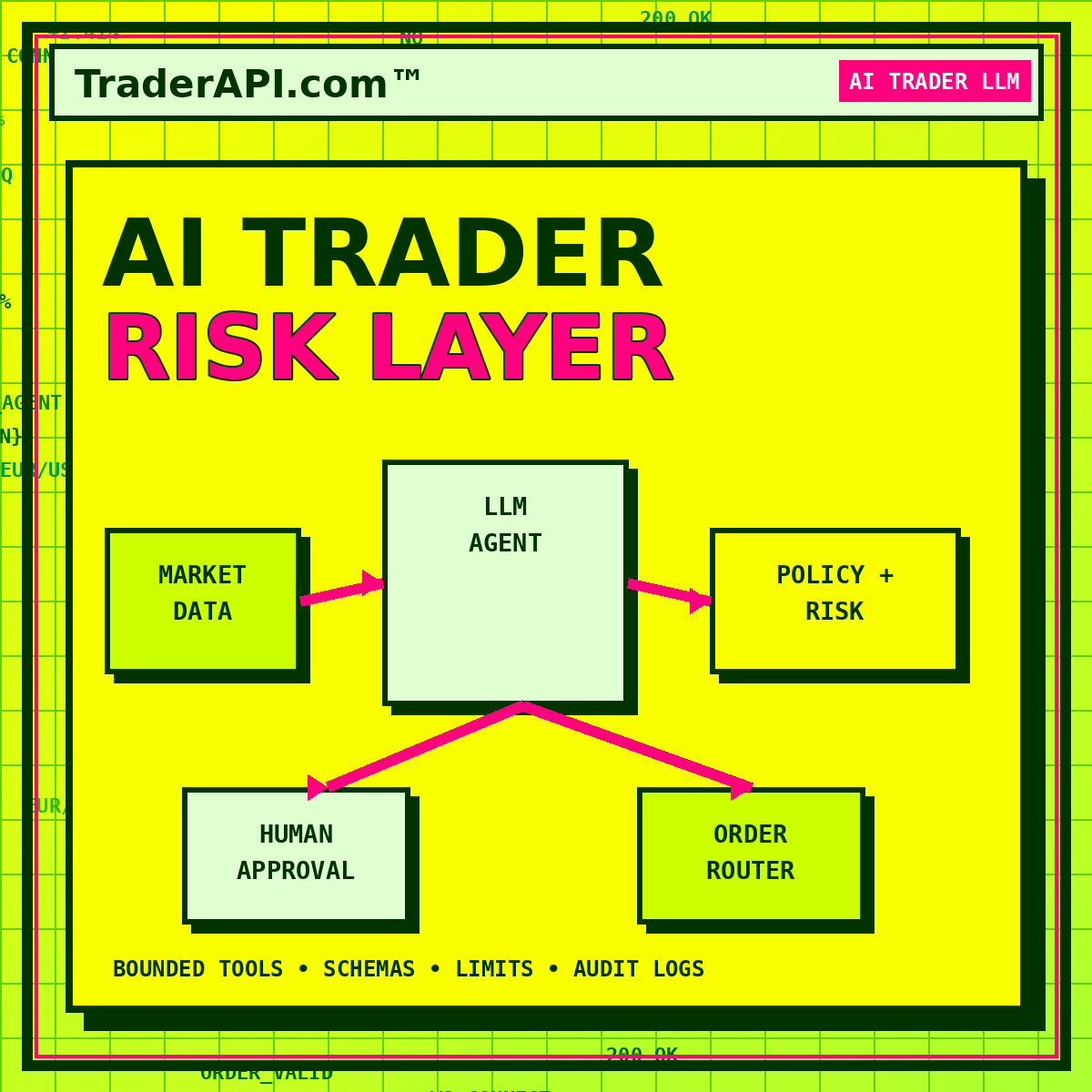
Design an AI Trader LLM API with bounded tools, deterministic policy checks, human approval, idempotent order routing, monitoring, and audit logs.
Read 13-minute guide →
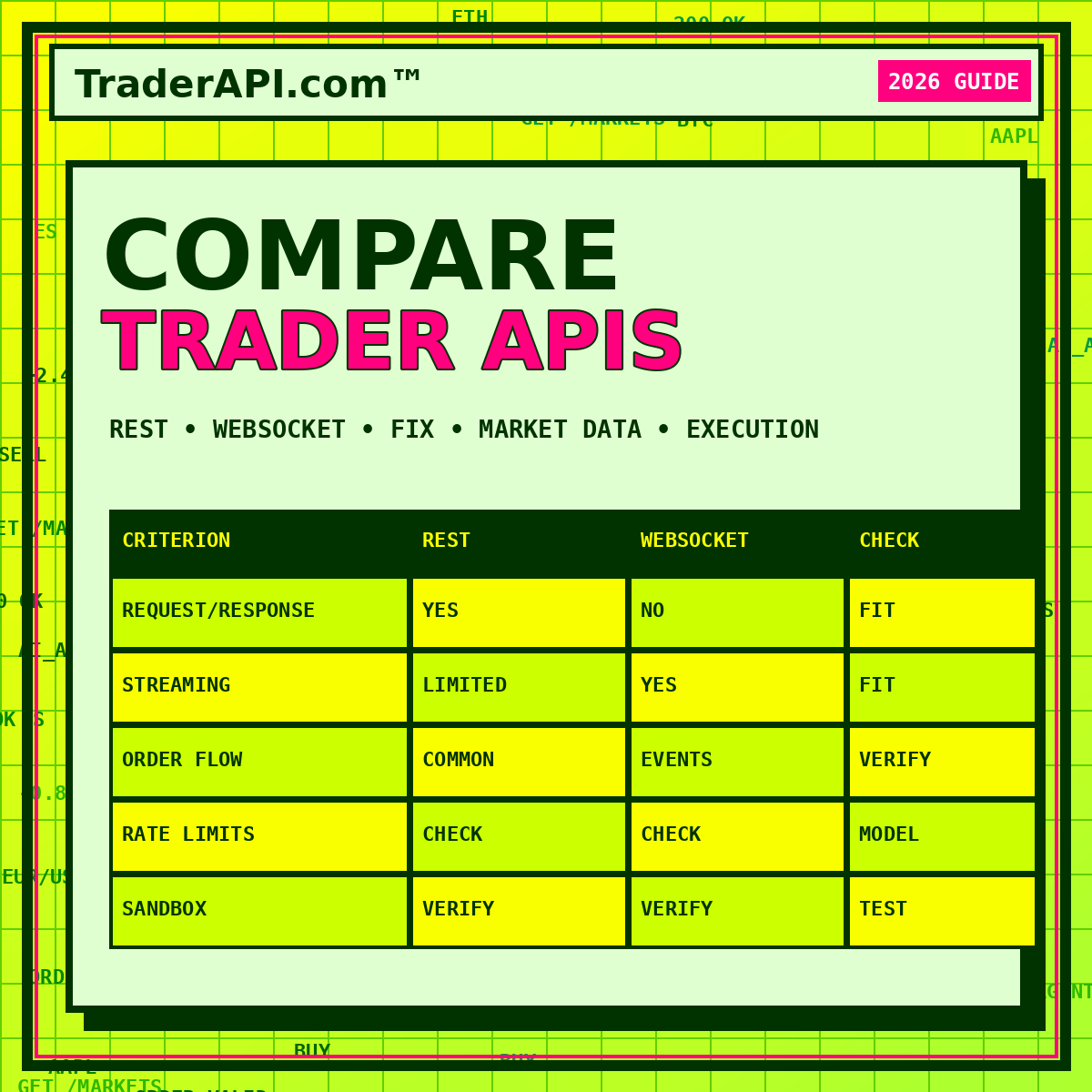
Compare Trader APIs by market coverage, data quality, execution workflow, streaming, security, reliability, testing, and total operating cost.
Read 12-minute guide →Corrections and topics
There is no contact form. Email factual corrections, source suggestions, or proposed topics directly.
[email protected]